

A professional GT3 driver spends his career learning what a car is telling him. When that same driver coaches others, he knows exactly what a simulator has to do to make the training count.
Felipe is that coach. He works with a father and son in Germany — the father races LMP and GT cars, the son is starting his own career in entry-level BMW racing. Felipe came to us to build them one simulator they could both train on.
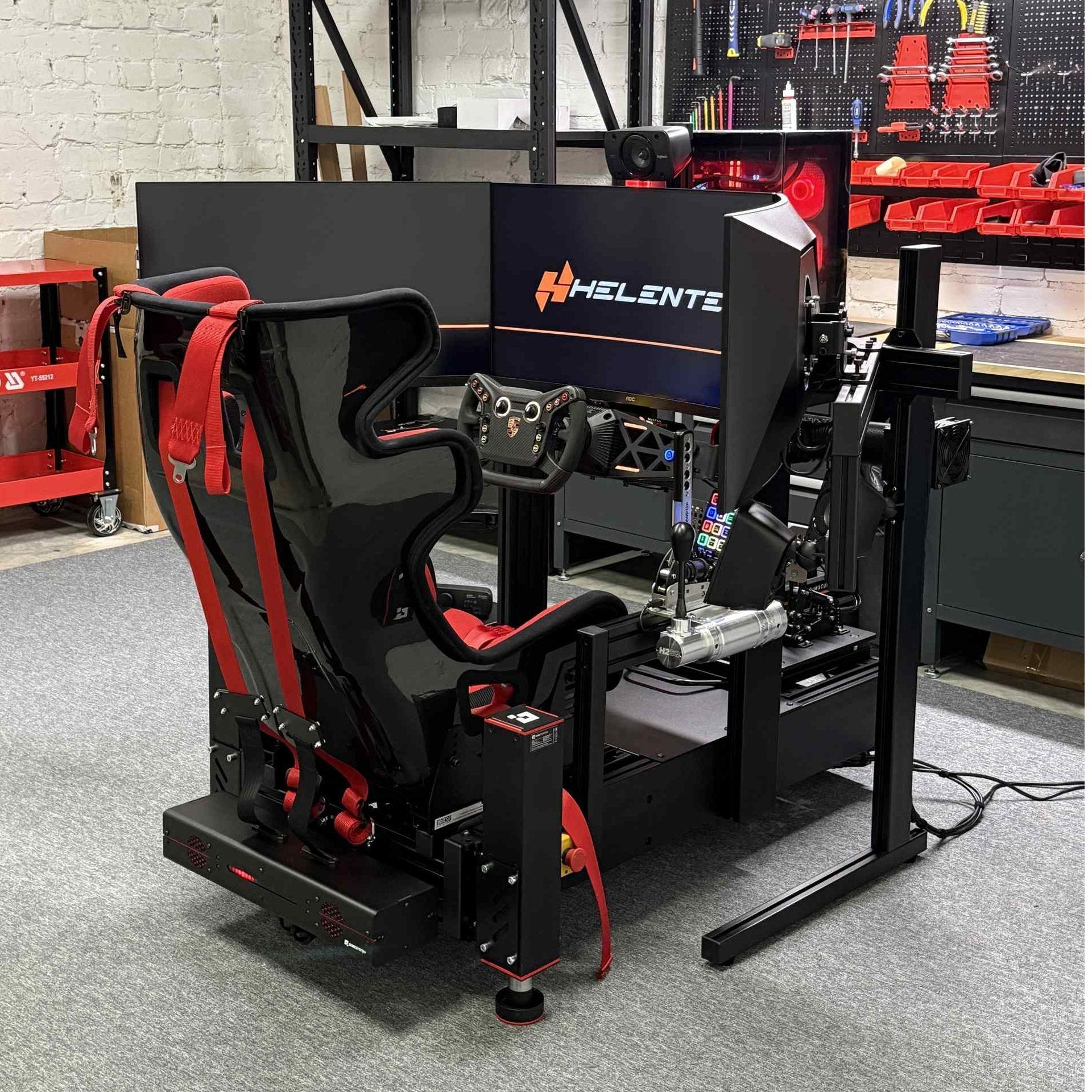
We speced and built them a maxed-out Helente H1, then drove it 13 hours from our workshop in Kaunas and installed it in their home ourselves.
The Setup They Were Replacing

Before this, they trained on a basic home setup — pedals that flexed under braking, screens that didn't line up, aging hardware fighting its own configuration.
For two drivers preparing for real race weekends, that gap matters. What you feel at home has to match what you feel in the car, or the practice doesn't carry over.
Speced With a Coach's Eye
Felipe knows what transfers from a sim to a real car and what doesn't. We put the build together and walked him through every choice, and he signed off — each part there to train his drivers, not to pad a spec sheet.
The brief was one rig that suited both of them: a father with years in LMP and GT machinery, and a son taking his first competitive laps.
Built Around the Way They Actually Drive

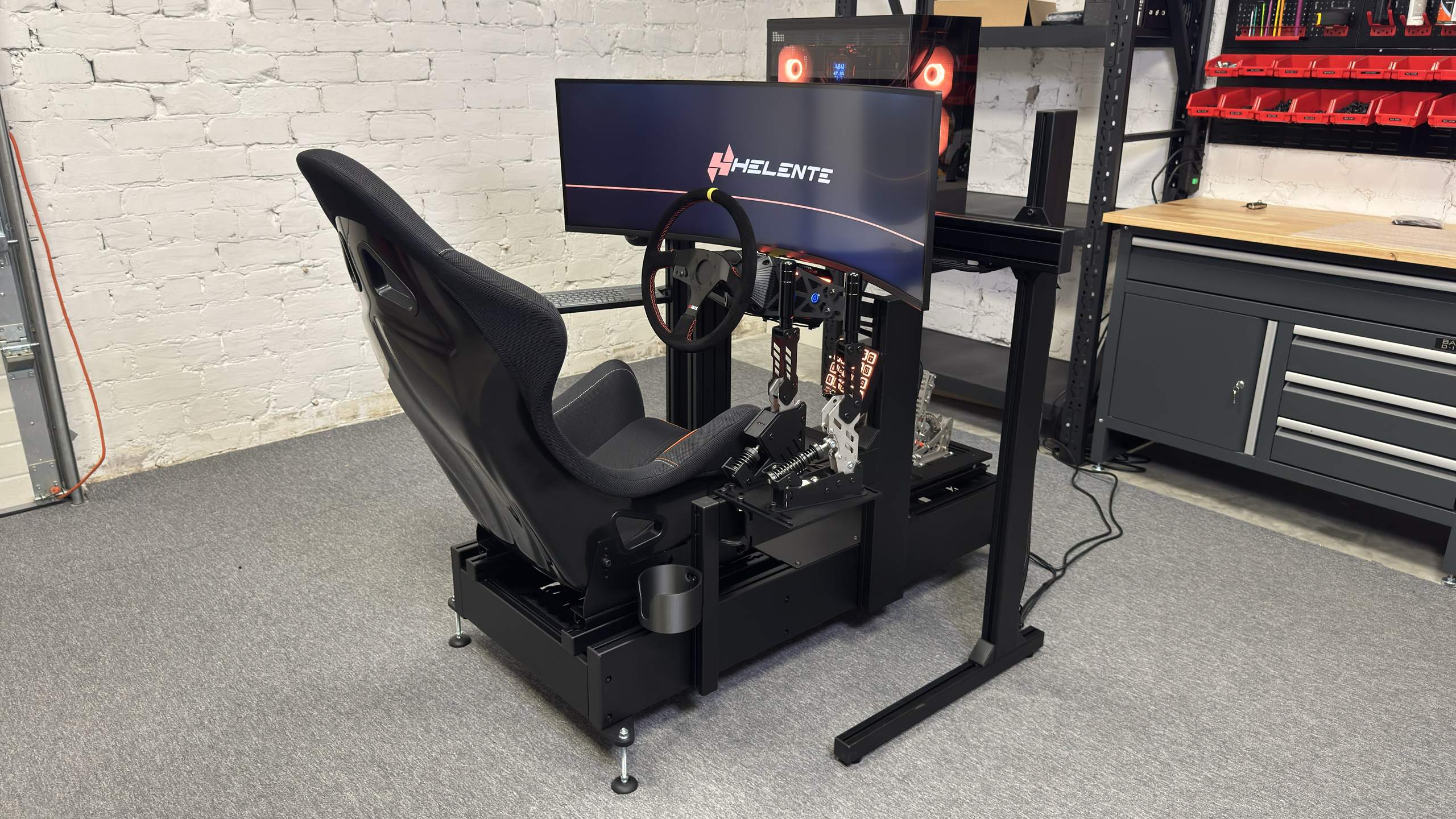
Every Helente starts with our own aluminium profile chassis — rigid, bolted, and fully adjustable. The seat and pedals sit on sliders, so the father and son can each find their position in seconds, no tools involved.
The active brake pedal is the part a coach appreciates most. It's infinitely adjustable — pressure, travel and bite point all set in software. With Felipe there on delivery, we matched the brake to feel like a real car. At this level, brake feel is most of the feedback a driver works from.
The belt tensioner pulls the harness — a red Sabelt six-point — into the chest under braking, so the body loads up the way it does on track. A motion system underneath moves the platform with the car.
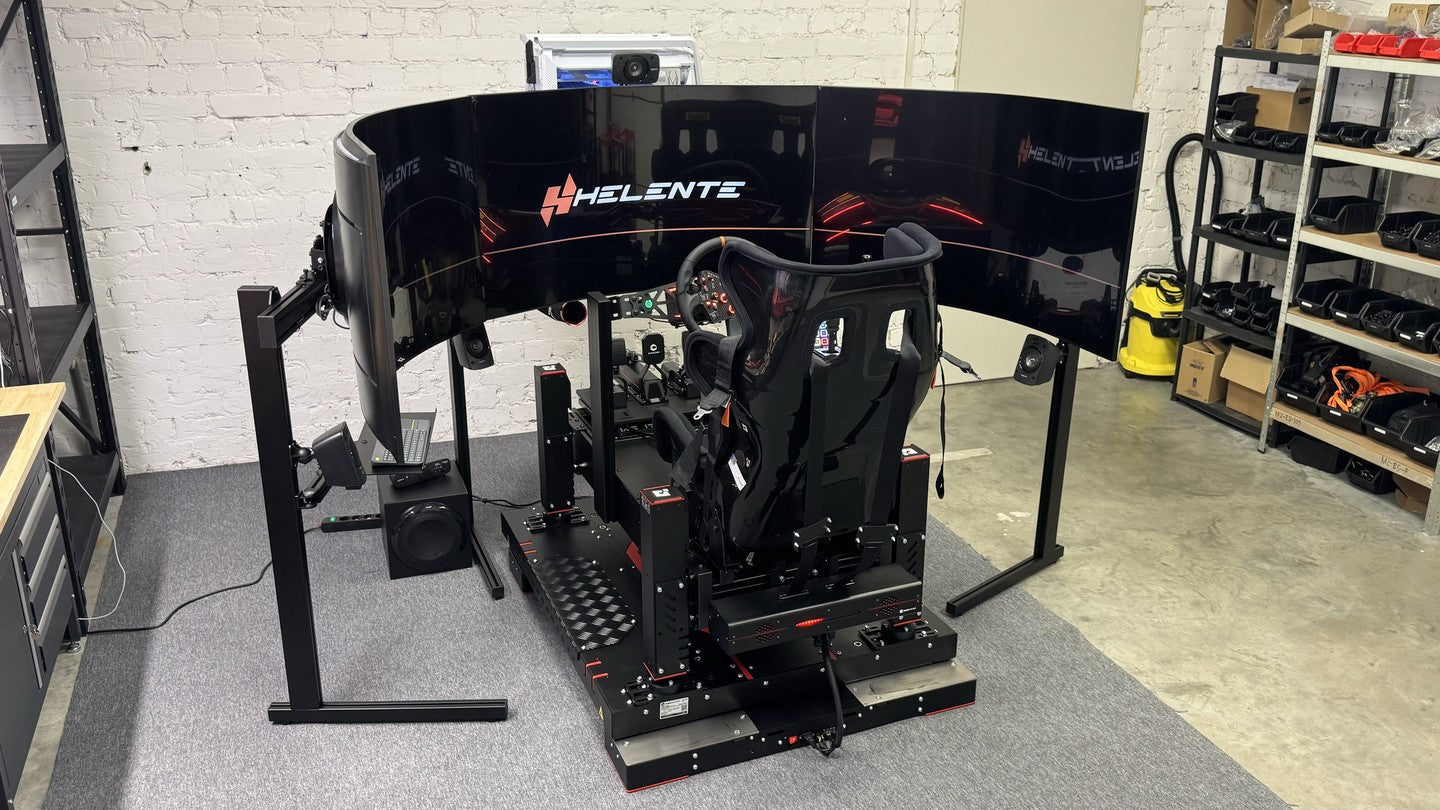
Two wheels cover their range: a VPG Porsche Cup replica and an Asetek Forte round wheel, on the strongest wheelbase Asetek makes. Triple 32-inch screens wrap the field of view, so you sit inside the car and look to the apex instead of at a bezel.

A sequential-and-H shifter and a load-cell handbrake round it out. Neither is essential for the way they race — they're there so the rig does more than one job. With Assetto Corsa Rally loaded, they can switch to rally and other styles for fun, alongside iRacing, Le Mans Ultimate and Assetto Corsa for the circuit racing they train for. A button box, active wind and a Sabelt GT seat finish the build.
Driven 13 Hours, Carried Up to the Second Floor
We could have crated it and shipped it. For this build, we drove.
Thirteen hours from Kaunas to Germany, up to the second floor, and built on site — seating, wheel, pedals and brake all set to them, every preference dialed before we left. From day one, the rig fit their bodies and their driving, not a generic setup.
Hundreds of Laps Before the Next Race

Now both drivers can put in real practice at home — hundreds of laps before a race weekend, any time they want, on a simulator built to feel like the cars they race.
That's the whole point of a training tool. Not something in the corner, but the closest thing to seat time when the track isn't an option.




How We Built a Lamborghini Super Trofeo Driver's Simulator
Our Most Realistic Simulator for a Nordschleife Driver